

TLDR
Blue Majik is a branded phycocyanin extract from spirulina, sold mainly as a natural blue food coloring. It carries spirulina’s blue pigment but very little of its protein, iron, or vitamins.
- Blue Majik is a concentrated phycocyanin extract, often listed around 30 to 40% phycocyanin, the blue pigment that makes up only 14 to 20% of whole spirulina. The extraction strips out the protein, which is 50 to 70% of whole spirulina by weight, along with most of the minerals.
- At around $47 per 60 grams it costs several times more per gram than whole spirulina, and nearly all of the human health research uses whole spirulina, not the isolated pigment.
- Phycocyanin shows antioxidant and anti-inflammatory activity in laboratory and animal studies, but no completed human trial has tested the isolated extract for a health benefit.
Read on for how blue spirulina extracts like Blue Majik compare to whole spirulina, what the research does and doesn’t show, and when the blue powder is actually worth buying.
What is Blue Majik powder?
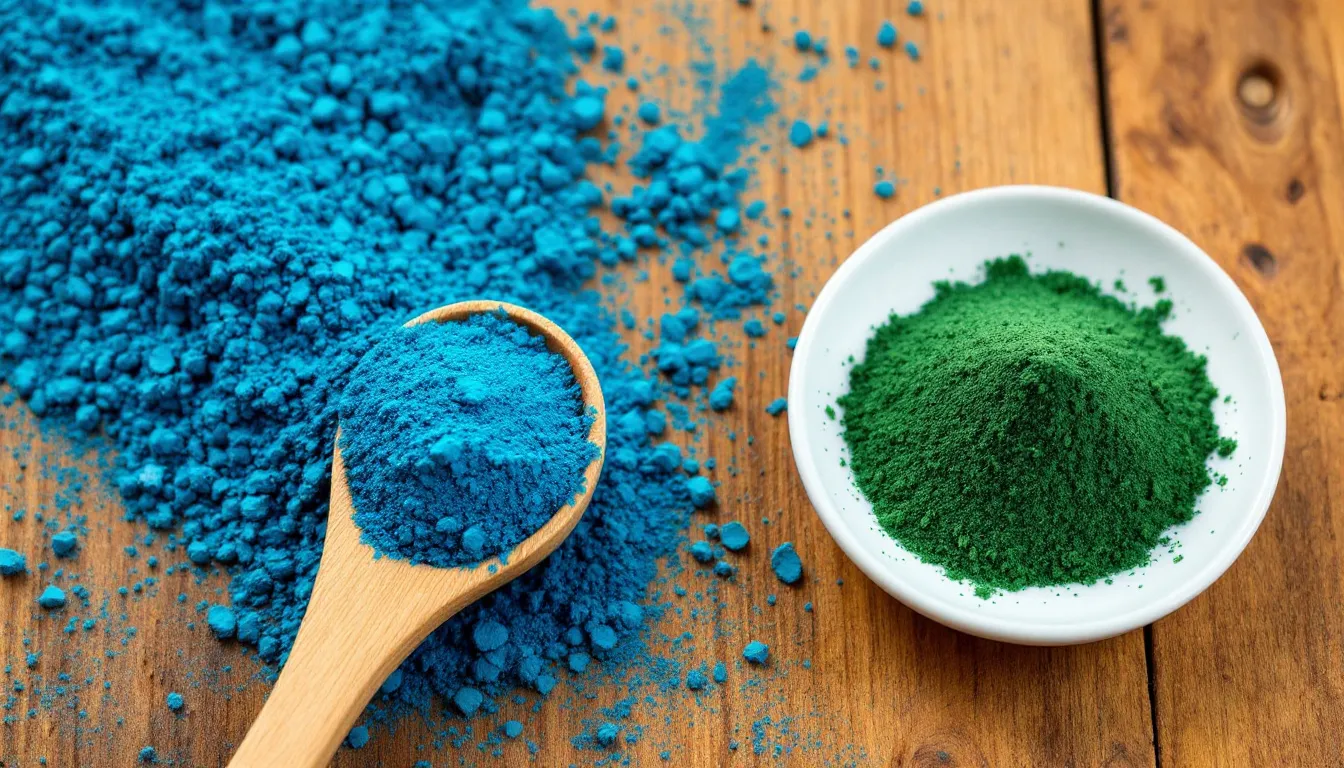
Blue Majik powder took off on social media for its azure color, but the supplement is more specific than the marketing suggests. Blue Majik is a proprietary phycocyanin extract developed by E3Live in 2009, derived from spirulina (the blue-green algae Arthrospira platensis). Whole spirulina carries the complete nutritional profile of the algae. Blue Majik isolates one part of it: the blue pigment called phycocyanin.
Phycocyanin makes up roughly 14 to 20% of whole spirulina by dry weight (Fernandes et al. 2023). Blue Majik concentrates it further, with products often listed around 30 to 40% phycocyanin. The extraction that does this also removes most of the original nutritional matrix, including the protein, B vitamins, minerals, and fiber, leaving mostly the concentrated blue pigment behind.
Available as a fine powder, Blue Majik typically costs around $47 per 60 grams, which makes it much more expensive per gram than whole spirulina. The premium reflects both the extraction process and the powder’s popularity as a natural blue food colorant for the smoothie bowls and bright drinks that fill social feeds.
People are drawn to the color and to the association with spirulina’s reputation. The useful thing to understand before buying is that Blue Majik works mainly as a coloring agent, not as a complete dietary supplement.
How is Blue Majik different from blue spirulina and whole spirulina?
“Blue spirulina” is the broader product category that Blue Majik belongs to. Both are phycocyanin extracts, so the comparison that matters is the extract against whole spirulina. Isolating the pigment removes the majority of the nutrients that make spirulina a useful food.
| Nutrient (per 1 g) | Blue Majik (phycocyanin extract) | Whole spirulina |
|---|---|---|
| Protein | Trace | 500 to 700 mg (50 to 70%) |
| Iron | Negligible | ~0.3 to 0.5 mg (28 to 50 mg per 100 g) |
| B vitamins | Trace | Present |
| Carbohydrate / fiber | None to trace | Present (carbs 15 to 20%) |
| Phycocyanin | High (often listed 30 to 40%) | 14 to 20% |
Whole-spirulina composition figures above come from a 2024 compositional review (Spínola et al. 2024). The pattern is clear: whole spirulina is a protein-dense food with a complete amino-acid profile, and blue spirulina extracts deliver the pigment with little of the rest.
The cost angle follows from that. If you are after protein, iron, or B vitamins, you would need impractical amounts of Blue Majik to match a single gram of whole spirulina, at several times the price. The fuller nutrition sits in the intact algae.
What does the research on phycocyanin actually show?
Phycocyanin is more than a coloring. It is a pigment-protein complex, and it has real laboratory credentials. C-phycocyanin shows antioxidant and anti-inflammatory activity across many in vitro and animal studies (Citi et al. 2024). Researchers are also mapping spirulina’s multi-pathway anticancer mechanisms, though that work sits firmly in preclinical models (Akrout et al. 2026).
Two limits keep this honest. First, no completed human clinical trial has tested isolated phycocyanin for any health outcome; the human evidence base is built on whole spirulina (Fernandes et al. 2023; Citi et al. 2024). Whole-spirulina trials are where the human data actually lives. A 2025 review of 16 human trials found that whole spirulina, typically around 2 g per day, was associated with lower blood pressure, improved blood lipids, and reduced inflammatory markers (de Brito Alves et al. 2025). Spirulina has also been recognized by the FDA as Generally Recognized as Safe, with documented human use in conditions such as allergic rhinitis (Karkos et al. 2011).
Second, phycocyanin is a protein, and proteins are largely digested in the gut. Its oral bioavailability is limited (Citi et al. 2024), which is one more reason the isolated pigment is hard to translate into the kind of benefits the whole food has shown in people. Phycocyanin’s lab activity is genuine. The leap from a cell-culture result to a health claim for a teaspoon of blue powder is not.
Does fresh or dried spirulina change what you get?
Processing changes spirulina more than most shoppers expect, and phycocyanin is the compound most exposed to it. Heat is the problem. In solution, phycocyanin stays stable around 45°C but loses most of itself in under 10 minutes at 80°C, and the damage is both color loss and structural unfolding of the protein (Faieta et al. 2022). Color stability, in other words, is a rough proxy for whether the pigment is still intact.
That matters for dried spirulina powders, which pass through heat during drying. Independent analytical work found that oven-drying spirulina cut its C-phycocyanin content by roughly 55%, while frozen storage preserved the pigment along with phenols and vitamin C (Papalia et al. 2019). Fresh frozen spirulina skips the drying step. The biomass is frozen at harvest and stays cold through distribution, which keeps more of the pigment and other heat-sensitive compounds intact. This is the core of how fresh and dried spirulina differ.
At New Farmers we farm and freeze our own spirulina, with third-party testing for heavy metals and microcystin. That is a different proposition from an isolated pigment extract: fresh frozen spirulina keeps the whole food, water and all, rather than concentrating one component and discarding the rest.
How do you use Blue Majik, and does it work as a natural food coloring?
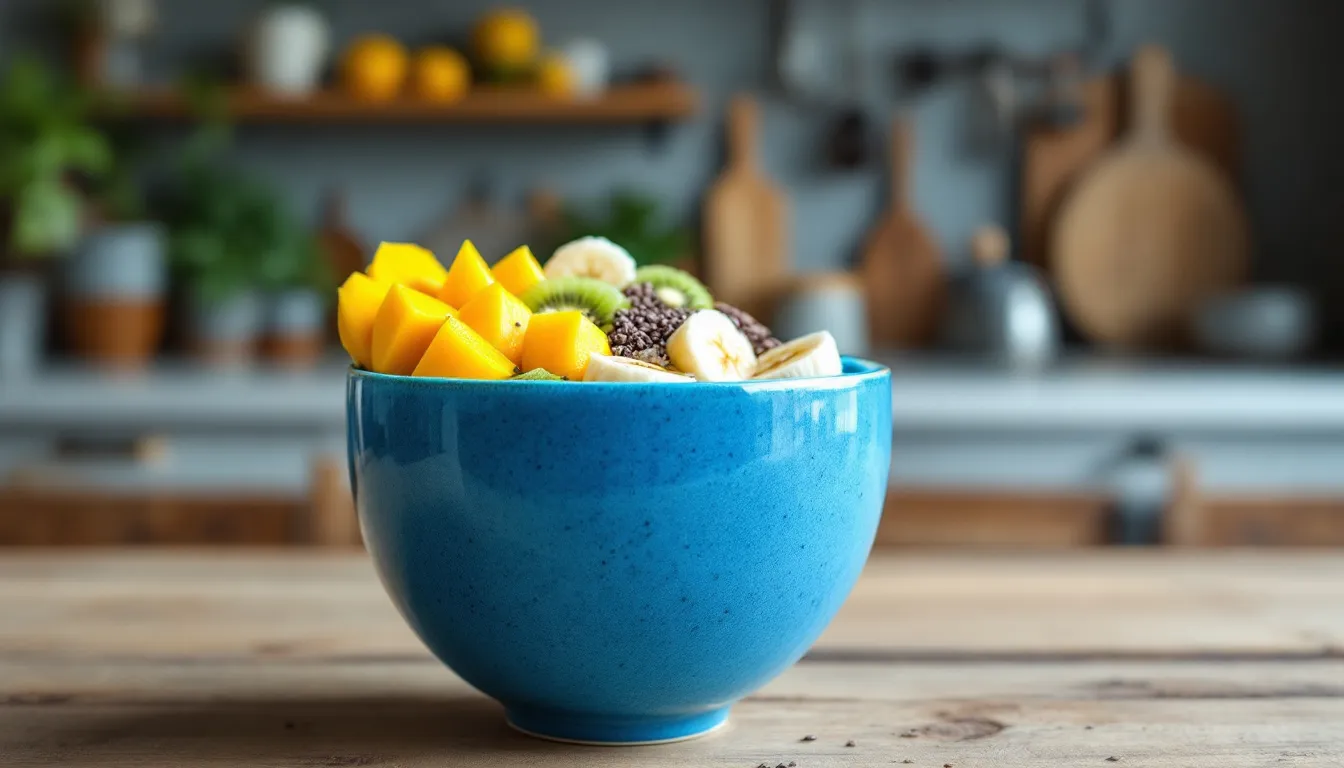
This is where Blue Majik earns its place. As a natural blue food colorant it is a clean alternative to synthetic dyes, and the color is genuinely striking. It works well in cold applications: smoothie bowls and shakes, plant-based ice cream and frozen desserts, chia puddings and overnight oats, raw desserts, and cold drinks and plant-based milks.
The catch is heat. Because phycocyanin unfolds at higher temperatures (Faieta et al. 2022), the color fades when it is cooked or added to anything hot. A few practical habits help:
- Blend with liquid first to prevent clumping.
- Add it to cold or room-temperature ingredients.
- Keep it away from heat to protect the color.
- Mix thoroughly for an even shade.
A typical serving is about 1 teaspoon (1 gram), which delivers vivid color but little nutritional value compared with the same amount of whole spirulina. The flavor is mild and slightly earthy, much softer than whole spirulina, which is part of why it slips into recipes so easily. For restaurants and food makers who want a natural blue from a recognized source, it is an attractive option, as long as everyone understands they are paying mostly for the color.
Should you buy Blue Majik or whole spirulina?
The decision comes down to what you want it for.
Blue Majik makes sense when the goal is the color. Natural blue food coloring, photogenic recipes, and specific aesthetic results are the cases where it earns its premium.
Whole spirulina makes more sense for nutrition. If you are after protein, iron, B vitamins, or the broad effects that human trials have linked to whole spirulina, the intact food gives you far more per gram and per dollar. For that purpose, blue spirulina benefits centered on phycocyanin are a thinner slice of what whole spirulina offers. Among whole-spirulina formats, fresh frozen preserves the heat-sensitive compounds that drying degrades, which is why fresh frozen spirulina pods come as the whole food rather than a powder.
At around $47 per 60 grams, Blue Majik costs several times more per gram than whole spirulina. Spend on the pigment if you want the color. Spend on whole spirulina if you want the food.
Is Blue Majik safe?
Spirulina, the source of Blue Majik, holds Generally Recognized as Safe (GRAS) status and is considered non-toxic in normal dietary amounts (Karkos et al. 2011). A human safety trial of high-dose phycocyanin, around 1 gram per day for two weeks, found no effect on blood-clotting or platelet-activation markers (Jensen et al. 2016). A few considerations still apply.
Mild digestive upset can occur in sensitive people, usually at higher amounts. Spirulina is well-tolerated by the vast majority of people, but rare cases of allergy, including anaphylaxis, are documented in the literature, mostly in people with multiple existing allergies (Le et al. 2014). Anyone with a strong allergy history may want to start with a very small amount.
A few groups should take extra care:
- People with phenylketonuria (PKU) should avoid spirulina products because of their phenylalanine content.
- People with autoimmune conditions should check with a healthcare provider first.
- Although the safety trial above found no effect on clotting markers, anyone on blood-thinning medication should still discuss any new supplement with their doctor.
Quality varies by source. The better blue spirulina and whole spirulina products come with third-party testing for heavy metals, microbial contamination, and toxins, which are the main quality risks worth understanding before you buy. Pregnant women should consult a healthcare provider before taking spirulina in any form. Anyone who has an adverse reaction should stop and seek medical advice.
Frequently asked questions
Is Blue Majik worth the price compared with regular spirulina?
For nutrition, no. Blue Majik costs several times more per gram than whole spirulina while providing little protein, iron, or vitamins. If your goal is nutrition, whole spirulina is far better value. Blue Majik is worth it mainly when you specifically need a natural blue food coloring.
Can I get the same blue color from whole spirulina powder?
No. Whole spirulina powder is green, because chlorophyll and other pigments sit alongside the blue phycocyanin. The pure blue comes from isolating phycocyanin, which is what blue spirulina extracts like Blue Majik do. Whole spirulina will tint food green, not blue.
What is the difference between Blue Majik and other blue spirulina extracts?
Blue Majik is a specific branded product from E3Live. Many companies now sell similar phycocyanin extracts as “blue spirulina.” The differences come down to phycocyanin concentration, extraction method, source quality, and price. Some products reach 30 to 40% phycocyanin while others are lower, so it is worth checking a certificate of analysis for the actual content.
How long does Blue Majik powder keep its color?
Stored in an airtight, opaque container away from light and heat, it can keep for up to about two years. The blue is sensitive to light, heat, and moisture, so cool storage helps. Because phycocyanin unfolds with heat (Faieta et al. 2022), cooking with it causes the color to fade quickly.
Are there studies comparing Blue Majik with whole spirulina?
Not head to head. Almost all human research uses whole spirulina rather than isolated phycocyanin extracts. Phycocyanin shows antioxidant activity in laboratory studies (Citi et al. 2024), but no completed human trial has tested the isolated extract for a health benefit, so the broad benefits people associate with spirulina come from studies on the whole food.
References
- Fernandes R, Campos J, Serra M, et al. (2023). Exploring the Benefits of Phycocyanin: From Spirulina Cultivation to Its Widespread Applications. Pharmaceuticals. https://doi.org/10.3390/ph16040592
- Spínola MP, Mendes AR, Prates JAM. (2024). Chemical Composition, Bioactivities, and Applications of Spirulina (Limnospira platensis) in Food, Feed, and Medicine. Foods. https://doi.org/10.3390/foods13223656
- Citi V, Torre S, Flori L, et al. (2024). Nutraceutical Features of the Phycobiliprotein C-Phycocyanin: Evidence from Arthrospira platensis (Spirulina). Nutrients. https://doi.org/10.3390/nu16111752
- Akrout H, et al. (2026). Spirulina and Its Bioactive Compounds as Multi-Target Anticancer Agents: Mechanisms, Immune Modulation, and Translational Potential. Medical Sciences. https://doi.org/10.3390/medsci14020189
- de Brito Alves JL, da Costa GLA, de Sales LCS, et al. (2025). Shedding light on the impacts of Spirulina platensis on gut microbiota and related health benefits. Critical Reviews in Food Science and Nutrition. https://doi.org/10.1080/10408398.2024.2323112
- Karkos PD, Leong SC, Karkos CD, et al. (2011). Spirulina in Clinical Practice: Evidence-Based Human Applications. Evidence-Based Complementary and Alternative Medicine. https://doi.org/10.1093/ecam/nen058
- Papalia T, Sidari R, Panuccio MR. (2019). Impact of Different Storage Methods on Bioactive Compounds in Arthrospira platensis Biomass. Molecules. https://doi.org/10.3390/molecules24152810
- Faieta M, Neri L, Di Michele A, et al. (2022). Degradation kinetics of C-Phycocyanin under isothermal and dynamic thermal treatments. Food Chemistry. https://doi.org/10.1016/j.foodchem.2022.132266
- Jensen GS, Drapeau C, Lenninger M, Benson KF. (2016). Clinical Safety of a High Dose of Phycocyanin-Enriched Aqueous Extract from Arthrospira (Spirulina) platensis. Journal of Medicinal Food. https://doi.org/10.1089/jmf.2015.0143
- Le TM, Knulst AC, Röckmann H. (2014). Anaphylaxis to Spirulina confirmed by skin prick test with ingredients of Spirulina tablets. Food and Chemical Toxicology. https://doi.org/10.1016/j.fct.2014.10.024